
What Should You Check Before Adding a Motor to a Paddleboard?
Use an on-water paddleboard demonstration to plan the mounting, power and control questions for your own boards, then compare configurations for a shop or rental fleet.
Watch one paddleboard configuration on the water
Use this supplier demonstration to identify the application you want to discuss, then review the mounting and equipment layout for your own board.
What to look for
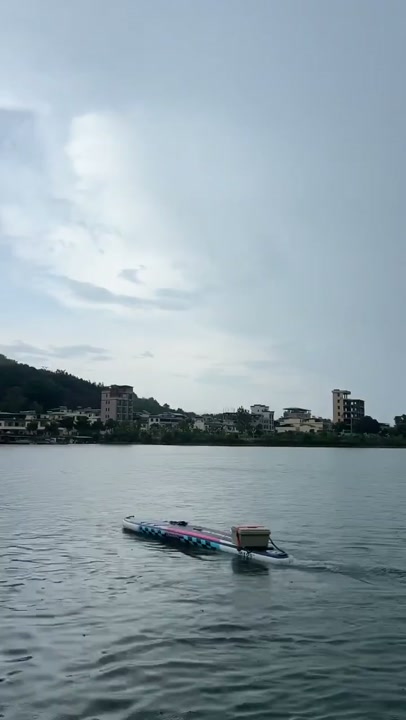
- A paddleboard is shown moving on the water.
- Equipment is visible on top of the board in this particular setup.
This is an application example, not an installation tutorial, proof of fit or a measured speed, load or operating-time test.
0:38 · Supplier demonstrationAn on-water clip can show how one paddleboard configuration appears in use. Choosing equipment for a shop or rental fleet starts with the boards you actually use: their construction, mounting interfaces and available space.
The linked supplier demonstration shows a paddleboard moving on the water with equipment on its deck. Use it as a starting point for a specific installation enquiry, then compare the proposed hardware against your board information.
In this guide
What does this paddleboard demonstration actually show?
The visible observations are straightforward: a paddleboard moves on the water, and equipment is carried on top. The view does not document the underside attachment, the electrical specifications or everything included in the configuration.
Refer to this exact clip when discussing the arrangement you have in mind. Ask for the corresponding unit reference and installation drawing rather than treating the scene as a universal paddleboard motor setup.
Which board details should start the mounting review?
Identify the board's brand, model and construction before discussing a bracket. If your business uses several board models, prepare a separate record for each. A removable fin or a similar-looking fitting does not establish that the same motor mount will suit them all.
| Information to provide | What it helps clarify |
|---|---|
| Board model, construction and overall dimensions | Which board the proposed configuration must be reviewed against. |
| Overall, underside and stern photographs | The intended location and surrounding board features. |
| Close-up interface photos and requested measurements | The proposed bracket or adapter connection. |
| Intended use and approximate total load | The application to consider when reviewing the configuration. |
| Proposed deck equipment and cable locations | Available space for the power supply, controls and connections. |
How should the bracket and nozzle space be checked?
Request a dimensioned drawing showing the complete installed unit, its attachment points and the inlet and outlet locations. Compare it with the actual board measurements. For a steerable nozzle, the review also needs to account for the nozzle's permitted movement and its linkage.
Include access for connection, inspection and removal, along with carrying and storage. Ask which board manufacturer requirements apply to the proposed attachment. The video does not provide drilling, gluing or structural approval for your board.
What belongs in the power and control review?
Mark where the battery, motor controller and any enclosure would sit, then identify the proposed cable route. Ask for component references, connection information and cable lengths that match that layout.
For an existing battery, provide its model, nominal voltage, capacity, continuous discharge rating and connector details. Review these against the selected motor and controller together. Capacity alone does not establish compatibility or predict operating time.
How can you compare configurations for several board models?
Ask the quotation to distinguish the propulsion unit, bracket or adapter, power equipment and controls. For each board model, record which parts are proposed and which questions remain open.
A distributor can use this record to avoid presenting one photographed arrangement as a complete package for every board. A rental operator can use it to identify which board models need separate evaluation. Ask how any later component changes would be identified in the documentation.
What evidence should accompany a trial configuration?
Agree what you need to assess before discussing a larger quantity. That may include the drawing, component list, connection documentation and a proposed evaluation on the intended board.
If speed or operating time matters to the decision, request figures tied to an identified configuration and test conditions, including the board, battery, load and water conditions. This demonstration alone does not establish those figures for your fleet.
What should you send for a paddleboard configuration enquiry?
Bring the board information, proposed layout and purchasing scope into one brief. This makes the enquiry specific enough to discuss the required hardware and the evidence still needed.
- Board models, construction and relevant manufacturer requirements.
- Mounting photographs, measurements and proposed equipment locations.
- Existing battery and control details, if any.
- Intended use, approximate total load and steering preference.
- Trial quantity, expected batch quantity and destination country.