
How Does Waterjet Steering Work?
Follow the handheld control, housing and outlet in a bench demonstration, then separate nozzle steering from motor control when reviewing a proposed system.
Watch the remote and thruster bench example
Locate the handheld control, housing, outlet and cable, then use the guide to separate motor-control and nozzle-steering questions.
What to look for
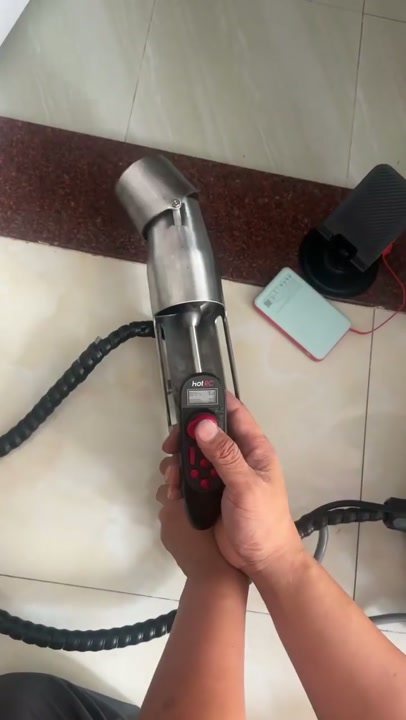
- A handheld remote is shown with a silver-finish thruster.
- The housing, outlet and connecting cable can be seen together.
This example does not establish steering angle, reverse operation, GPS, return-to-home, rated thrust or an environmental rating for the complete system.
0:17 · Supplier demonstrationA handheld remote beside a waterjet thruster does not describe the complete control system. Buyers need to know which equipment commands motor output, which parts position the nozzle and how those components work together.
The linked supplier bench demonstration brings the remote, silver-finish housing, outlet and connecting cable into view. This guide uses that example to organise the questions a distributor, shop or rental operator should ask about a quoted configuration.
In this guide
What can you identify in this bench demonstration?
The clip shows a handheld remote together with a thruster, allowing the housing, outlet and cable to be located in the same scene. It is a useful reference when discussing the hardware arrangement.
A bench view does not document the complete wiring, control settings or the craft's response on the water. Identify the demonstrated unit separately from the unit on the quotation, then request the relevant component references and drawings.
How does a steering nozzle affect direction?
In a waterjet, a motor-driven impeller accelerates water through the unit and out of an outlet. A steerable nozzle changes the direction of the outgoing flow, helping change the direction of the force acting on the craft.
In a steerable layout, an actuator can position that nozzle through a mechanical linkage while the main housing stays mounted. Confirm the arrangement for the selected version. The craft, mounting location and conditions still matter to the steering response; nozzle movement alone does not predict a turning result.
Which parts control thrust, and which control steering?
The electronic speed controller, or ESC, manages motor operation. The steering actuator positions the nozzle. Commands may come from one handheld controller, but the functions and their connections still need to be identified separately.
| Component or function | What to confirm for the quoted configuration |
|---|---|
| Motor and ESC | Exact component references, supply requirements and commanded motor functions. |
| Outlet nozzle | Whether it is fixed or steerable, with the relevant drawing. |
| Steering actuator and linkage | Included parts, permitted movement and required clearance. |
| Remote and receiver | Compatible versions and how thrust and steering commands are connected. |
| Power and control cables | Connection diagram, connector references and required lengths. |
Does your craft need a fixed or steerable outlet?
A fixed outlet has a set direction relative to the housing, so the complete craft needs an agreed way to be directed. A steerable outlet brings additional questions about its actuator, linkage, controls and movement space.
Start with the intended craft and its existing steering arrangement. For a kayak, document the mounting area and current controls. For a paddleboard, identify the actual attachment interface and construction. Housing colour and similar product photographs are insufficient grounds for selecting a steering configuration.
Which control behaviours should a fleet buyer ask about?
Request documentation of normal commands, stopping and the response to a lost control signal for the exact system. Ask separately about reverse: nozzle steering does not establish a reversing mechanism or permission to operate the motor in either direction.
If GPS or return-to-home is a project requirement, ask whether the quoted control system supports it and what compatible equipment is required. This bench clip does not establish either capability.
How can distributors keep control configurations comparable?
Compare quotations using a shared list of the propulsion unit, ESC, actuator, receiver, remote and connections. Mark each item as included, optional or customer supplied. Record the drawing or document revision used for the comparison.
For repeat orders or several craft models, ask how configuration differences and later component changes would be identified. If you need an on-water evaluation, state the craft and the questions to assess. Do not substitute the bench demonstration for that application review.
What should your steering enquiry include?
Describe how you want to command thrust and direction, then request a documented proposal for that craft. Keep the selected component list and control questions together when comparing options.
- Craft make, model and existing steering arrangement.
- Mounting photographs, dimensions and available nozzle movement space.
- Preferred fixed or steerable outlet and intended control functions.
- Existing battery, remote and receiver references, if applicable.
- Required quantity, destination and documentation needed for evaluation.