
What Should You Check in a Paddleboard Control Demo?
Use a standing-rider demonstration to identify control and equipment-layout questions, then request a configuration matched to the actual board and intended customers.
Watch the standing SUP demonstration
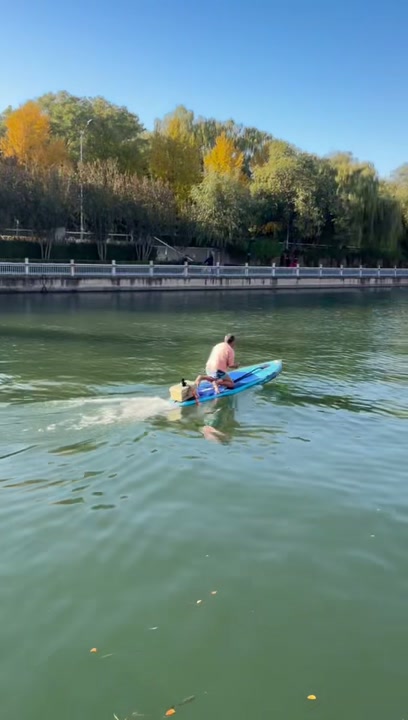
Observe the standing rider, movement, turns and rear equipment box, then use the questions below to review a specific control configuration.
What to look for
- A rider stands on a paddleboard while it moves across the water.
- The board changes direction during the demonstration.
- An equipment box is visible near the rear of the board.
Supplier demonstration footage. The clip does not establish measured handling performance, a complete control specification or compatibility with another board.
1:12 · Supplier demonstrationA standing rider moves and turns across the water in this supplier demonstration, with an equipment box near the rear of the paddleboard. For distributors, outdoor shops and rental operators, the clip starts a discussion about propulsion equipment and controls for a SUP project.
The useful next step is to connect the visible arrangement to an identifiable product configuration. Ask which components produced the demonstrated movement, how they are commanded and what needs to change for your board. The footage alone does not supply those answers.
In this guide
What does the standing-rider demonstration actually show?
The rider stands as the board travels and changes direction. The equipment box's position relative to the rider also helps define the application you want to discuss.
The video does not identify every installed component, demonstrate every control function or establish measured handling performance. Request the configuration reference before treating the scene as a proposed package.
Which control functions should be confirmed separately?
Ask the supplier to describe how motor output, direction and stopping are commanded on the quoted setup. A turning board does not, by itself, identify the control input or prove that another remote will work with the same hardware.
Request the remote, receiver and controller references, together with a connection description. Ask for the documented response to a lost control signal and any conditions attached to that behavior. These are questions for the selected system, rather than conclusions to draw from the rider's movement.
How should the rear equipment layout be reviewed?
Treat the visible rear box position as one example. Send photographs of your board, the rider area and the proposed equipment locations. Include the attachment interface, available space and intended cable route so the proposed arrangement can be reviewed together.
Ask for dimensions and attachment details for the actual box and propulsion unit. A similar-looking board or mounting accessory is not enough to settle the fit. The review should also identify which parts are supplied and which your project must provide.
What information makes a SUP control enquiry useful?
A short comparison table keeps the first discussion specific. Start with what you know, then use the supplier's response to identify the remaining configuration questions.
| Information to provide | What it helps confirm |
|---|---|
| Board make, model and mounting photographs | The proposed attachment and equipment locations. |
| Standing rider position and intended use | Which control arrangement should be discussed. |
| Existing battery and control references | Whether those components belong in the proposed combination. |
| Desired command functions | Which functions need a documented response. |
| Board variants and order quantity | Whether one configuration or several are required. |
What should distributors and rental operators compare?
Compare quotations by identifiable components and intended board models. If your customers use several boards, ask which interfaces remain common and which require a different mounting arrangement. Keep any proposed variations separate in the component list.
For repeated purchases, request the documents supplied with each configuration and the references used for replacement-parts enquiries. Ask what user information is available for the selected controls. The presence of a standing rider in this clip is not evidence of a standard rental package or a qualification for every customer.
How can the video support a more useful configuration review?
Share the video and explain which aspect interests you: standing operation, rear equipment placement or the change of direction. Ask the supplier to identify that setup and provide relevant hardware and control views.
If performance matters, request results for an identified board, power supply, load and test conditions. Keep those results separate from the short demonstration so the purchasing discussion has a documented basis.
What should you include in your SUP project brief?
Prepare an enquiry draft around your board and controls. Tidemovo Marine can use it to discuss a proposed configuration with the supplier.
- Board make, model, photographs and attachment measurements.
- Proposed rider, box and propulsion-unit locations.
- Existing battery and control component references.
- Required command functions and intended customer use.
- Quantity, board variants and destination country.